

The Current Vol 7

🌍 A look back at the last few weeks
The global furniture supply chain has entered another period of elevated uncertainty. Unlike the pandemic driven disruptions of 2020–2022, today’s market is being shaped by a combination of geopolitical tensions, evolving US tariff policy, changing shipping economics, and ongoing supply chain diversification.
While consumer demand has generally stabilized compared with the post-pandemic correction, retailers continue to operate in an environment where cost volatility remains significantly higher than historical averages. The primary risks currently affecting the furniture industry include:
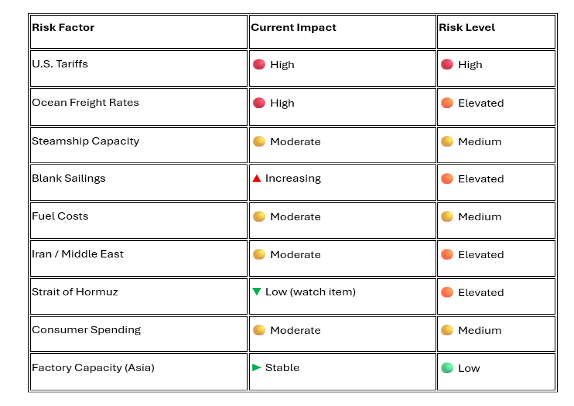
- Tariff Update – remains the single largest controllable cost factor affecting furniture imports into the United States. Every additional tariff percentage point generally increases landed cost and retail prices. Importers should continue to monitor updates to the U.S. Harmonized Tariff Schedule and related trade actions, as revisions can alter applicable duty rates and programs.
- Iran & Strait of Hormuz- The Strait of Hormuz remains one of the world’s most strategically important maritime corridors because a significant share of global crude oil exports passes through it. While most furniture shipments from Asia to North America do not transit the Strait of Hormuz directly, disruptions there can influence the industry indirectly through higher energy prices, marine insurance costs, and bunker fuel expenses.
- Fuel Costs – represents one of the largest operating expenses for container shipping. Driven by crude oil prices, marine fuel regulations, carbon compliance programs, as well as regional/political strife all affect the fuel rate. This is ultimately embedded or seen with ocean rate increases, carrier surcharges such as PSS or bunker adjustments that are passed on to customer/consumer.
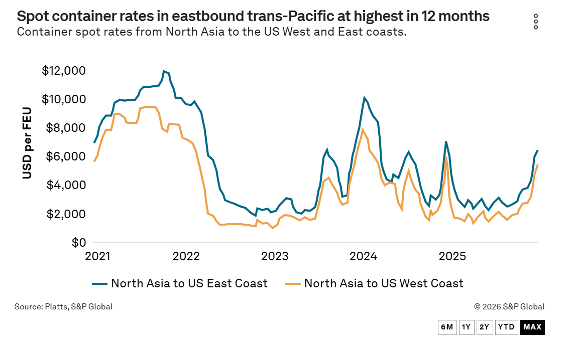
- Ocean Freight Market – recent tariff related front loading of imports has pushed spot rates upward again on all Asia to US trade lanes. Industry reporting indicates that importers accelerated bookings ahead of anticipated tariff changes, tightening capacity and supporting higher spot pricing Annual service contracts signed earlier in the year may provide some insulation from spot market volatility, but they do not eliminate exposure to: peak season surcharges (PSS), equipment imbalances, capacity constraints, emergency or fuel related surcharge (EBS/EFS/IFS)
🌍Forecasting what’s ahead
- Continue diversifying sourcing across multiple countries to reduce dependence on any single manufacturing base.
- Monitor tariff developments and classify products accurately under the Harmonized Tariff Schedule to optimize duty exposure.
- Lock ocean freight capacity earlier during peak shipping periods and continue to have suppliers submit bookings 4-6 weeks prior to ready dates.
- Maintain balanced inventory levels to absorb transit variability caused by blank sailings.
- Communicate transparently with customers about potential lead time changes and pricing impacts.
In the current environment, the lowest freight rate is not always the best option. Reliability, space protection, carrier mix, and visibility are becoming just as important as price.
Bottom Line
The global furniture market in 2026 is no longer defined by the acute operational disruptions of the pandemic but by a more nuanced set of strategic challenges. Geopolitical tensions, evolving trade policy, energy market volatility, and disciplined ocean carrier capacity management have replaced port shutdowns and widespread factory closures as the primary sources of uncertainty. For retailers, success increasingly depends on resilient sourcing strategies, diversified supplier networks, disciplined inventory management, and proactive communication with customers and their forwarders. For consumers, the environment is more favorable than in recent years, with improved product availability and more predictable delivery times, though prices remain sensitive to global events. Organizations that monitor geopolitical developments alongside traditional supply chain metrics will be better positioned to anticipate disruptions, manage costs, and make informed decisions. By treating global trade, logistics, and energy markets as interconnected elements of the furniture value chain, retailers can strengthen resilience while continuing to deliver value in an increasingly complex marketplace.
🌍 The Tradewinds: Highlights of Gulfstream and Bluewater
Did you know that Gulfstream and the Gnosis team have a Global Heat Map that you can access 24/7 within your Gnosis login? Apply map layers on the Global Map to view Vessel Count Heatmaps and Performance Heatmaps. These allow further insight into average worktimes, berth delays, etc. A weather overlay is available as well so you can monitor any weather events that may impact your vessel. Watch a tutorial here!