
The Current Vol 8
🌍 A look back at the last few weeks
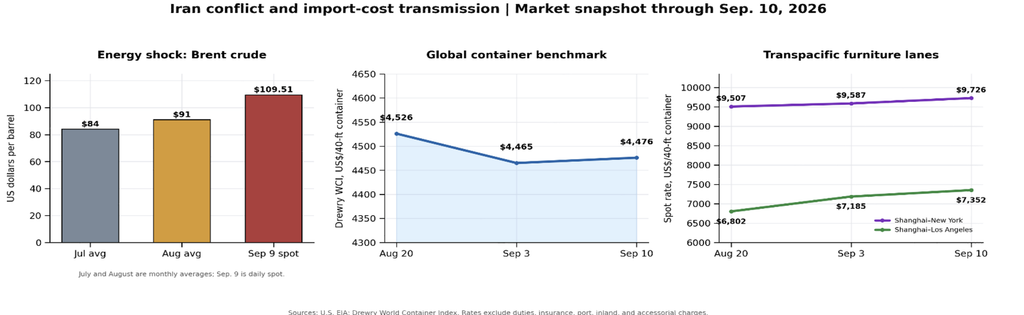
The main risk to the U.S. furniture supply chain now comes from several pressures working together, rather than tariffs or the Iran conflict alone. Higher import duties, spot oil above $100/barrel, rising freight costs, and softer discretionary spending are tightening margins and straining working capital across retailers, importers, manufacturers, and logistics providers. Ocean carriers have kept spot rates elevated through August, with only a modest market correction expected in September.
- Blank sailings, vessel rotations, schedule changes, and other capacity reductions continue to be used to manage available supply.
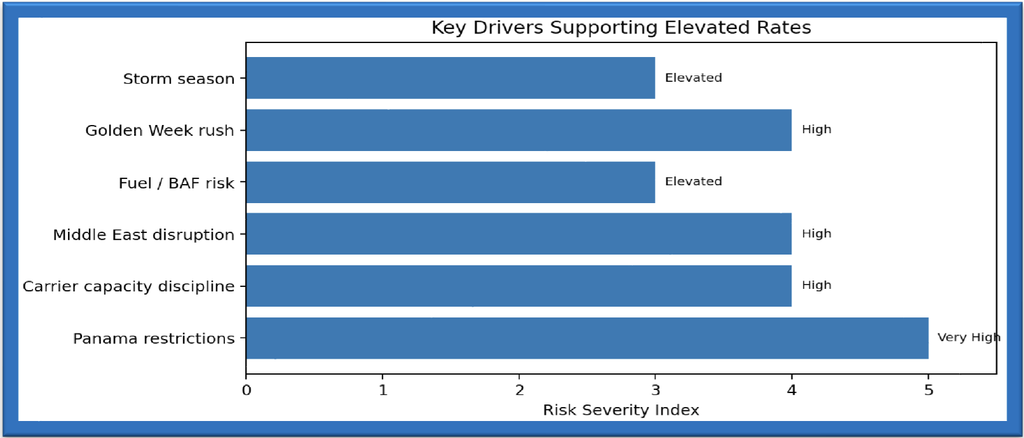
- Panama Canal surcharges were announced in mid-August, with additional increases planned for September as carriers compete for limited canal availability.
- Tropical storms and typhoon activity have intensified congestion at major ports, creating backlogs across Asia and other key Far East gateways.
🌍What you need to know now
- East Coast and Gulf Coast routings remain under the most pressure as Panama Canal restrictions continue to tighten.
- Rail congestion continues to build out of Los Angeles/Long Beach, particularly for cargo moving to Chicago, Kansas City, Houston, Memphis, and Atlanta.
- Domestic trucking and airfreight rates remain elevated due to sustained demand, higher fuel costs, and the pre-Golden Week rush from October 1–7.
- Geopolitical disruptions continue to create ripple effects. The Red Sea crisis has now extended beyond 1,000 days, while the Hormuz crisis has created nearly six months of ongoing disruption.
- Fuel remains a major factor as energy markets stay vulnerable to geopolitical developments, with additional fuel and bunker increases possible in the coming months.
🌍 Forecasting what’s ahead
Container freight conditions are expected to remain costly and lane specific. Tariff pressure will continue to build, leaving furniture shipments particularly exposed, especially from China based ports.
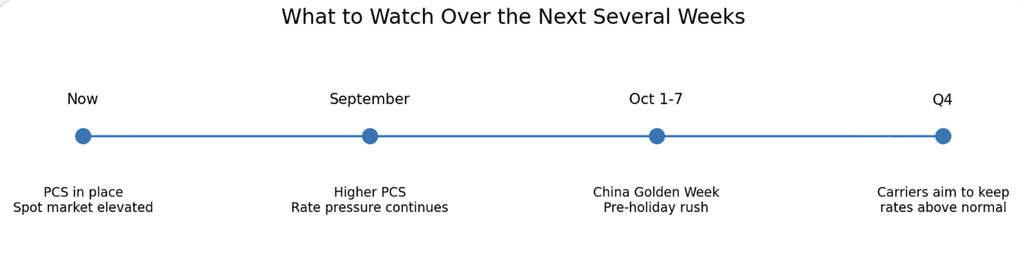
- Carriers appear focused on keeping rates elevated through China Golden Week, October 1–7.
- Blank sailings, winter rotations, geopolitical risk, and weather disruptions are all supporting firmer rate levels.
- The traditional Q4 rate slowdown may be milder than usual if carriers continue to pull capacity quickly.
- Fuel markets remain exposed to Middle East instability, even as September BAF levels are expected to ease slightly.
🌍 Recommended Action
- Book early: Secure space 4–6 weeks in advance, especially for East/Gulf Coast cargo and India origins.
- Share forecasts: Early volume visibility improves allocation, routing, and equipment planning.
- Stay flexible: Evaluate alternate routings and gateways as canal, rail, and inland disruptions continue.
- Prioritize execution: Focus on confirmed space and reliable departures.
🌍 The Tradewinds: Highlights of Gulfstream and Bluewater
Did you know that Gnosis can be used to directly upload documents? Use gnosis to upload documents such as (arrival notice delivery order packing list commercial invoice etc) directly to a specific container within the portal, making it easier to centralize and share information across your organization. Any user with access to the portal will be able to view these files.
For container-level communication, navigate to the Discussion tab to exchange messages with your team. When a new message is received, users will see a notification in the top right corner of the portal. Clicking into the notification will take you directly to the relevant container. Watch a tutorial here!
See below links to help give a Gnosis overview, set up your own personal portal, and a brief demonstration of the system.
Gnosis Intro Video: https://www.joc.com/video/bringing-a-holistic-approach-to-technology-5659206
Access the portal here: https://app.gnosisfreight.com
Brief Demo – https://guides.gnosisfreight.com/demo/cm6fi0v1o0005xo0hjk2rhvuc